

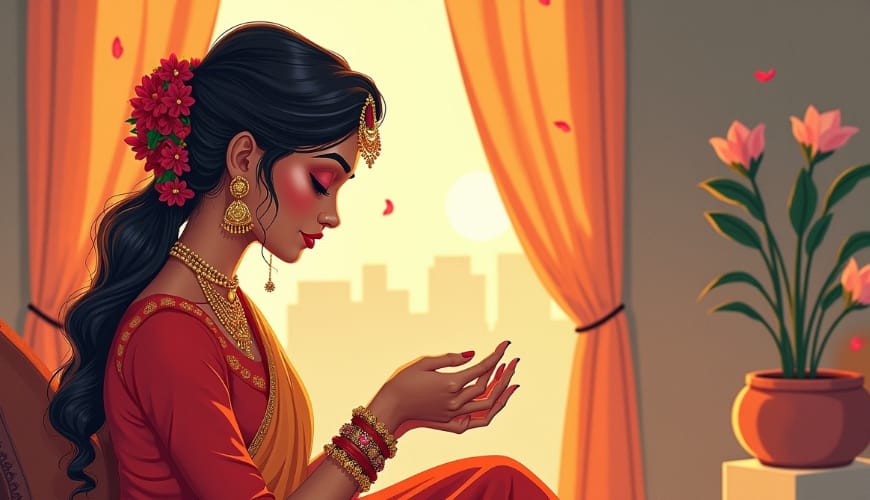
As an astrologer and someone who has observed countless rituals and traditions over the years, I’ve always been fascinated by how small practices carry deep meaning. One such beautiful tradition is Solah Shringar—the sixteen adornments of a married woman. These aren’t just about looking beautiful; each element carries energy, symbolism, and blessings.
Be A Reader of Your Life—when we understand the deeper significance of our traditions, they become more than rituals; they become a way to connect with our inner self, our relationships, and the energies around us.
What is Solah Shringar?
Solah Shringar refers to the 16 forms of adornment that a woman applies to herself, especially during special occasions, festivals, or religious ceremonies. Traditionally, these are:
- Bindi – The mark on the forehead, representing wisdom and the third eye.
- Sindoor – The red powder in the hair parting, symbolizing marital status and longevity of the husband.
- Mangalsutra – A sacred necklace representing marital bond and protection.
- Kajal (Kohl) – Applied to eyes for beauty and to ward off negative energy.
- Mehendi (Henna) – Symbolizing love, joy, and positive energy.
- Almond/Fragrant Oils (Hair Care) – For strength, shine, and health of hair.
- Earrings – Representing beauty and enhancing feminine energy.
- Nose Ring – Symbolizing elegance and cultural tradition.
- Necklace – Adds grace and often serves as a protective talisman.
- Bangles – Symbolize prosperity, health, and marital happiness.
- Rings – Enhance personal energy and denote auspiciousness.
- Anklets – Represent rhythm, beauty, and grace in movement.
- Toe Rings – Traditionally linked with marital status and positive energy in the body.
- Waist Belt/Kamarbandh – Adds beauty and maintains energy balance in the body.
- Hair Ornaments – Enhance aura and elegance.
- Footwear/Ornaments – Completes the adornment and ensures confidence and grace.
Why Solah Shringar is Important
Over the years, I’ve noticed that when women perform Solah Shringar, it’s not just about looking beautiful; it’s about aligning with positive energies. Each ornament has a symbolic meaning—inviting prosperity, protecting relationships, enhancing self-confidence, and harmonizing personal energy.
For example, the bindi is not only decorative—it is placed on the forehead where the ajna chakra resides, helping focus energy and wisdom. Similarly, wearing bangles or toe rings is said to improve circulation and create a flow of positive energy through the body.
Solah Shringar is also a way of celebrating femininity, self-love, and marital harmony. When a woman adorns herself with intention, it enhances not only her outer beauty but also her inner aura, radiating positivity to those around her.
This tradition is timeless, and observing it with awareness can make any festival, ritual, or personal celebration more meaningful. Solah Shringar is a beautiful reminder that spiritual energy and personal care go hand in hand.
Be A Reader of Your Life—notice how each small practice, each ornament, and each ritual carries energy, intention, and blessings. When understood deeply, these traditions enrich not just our outer appearance but our inner life too.
Maharishi Meghna Ji | Divine Beam Blessingz